
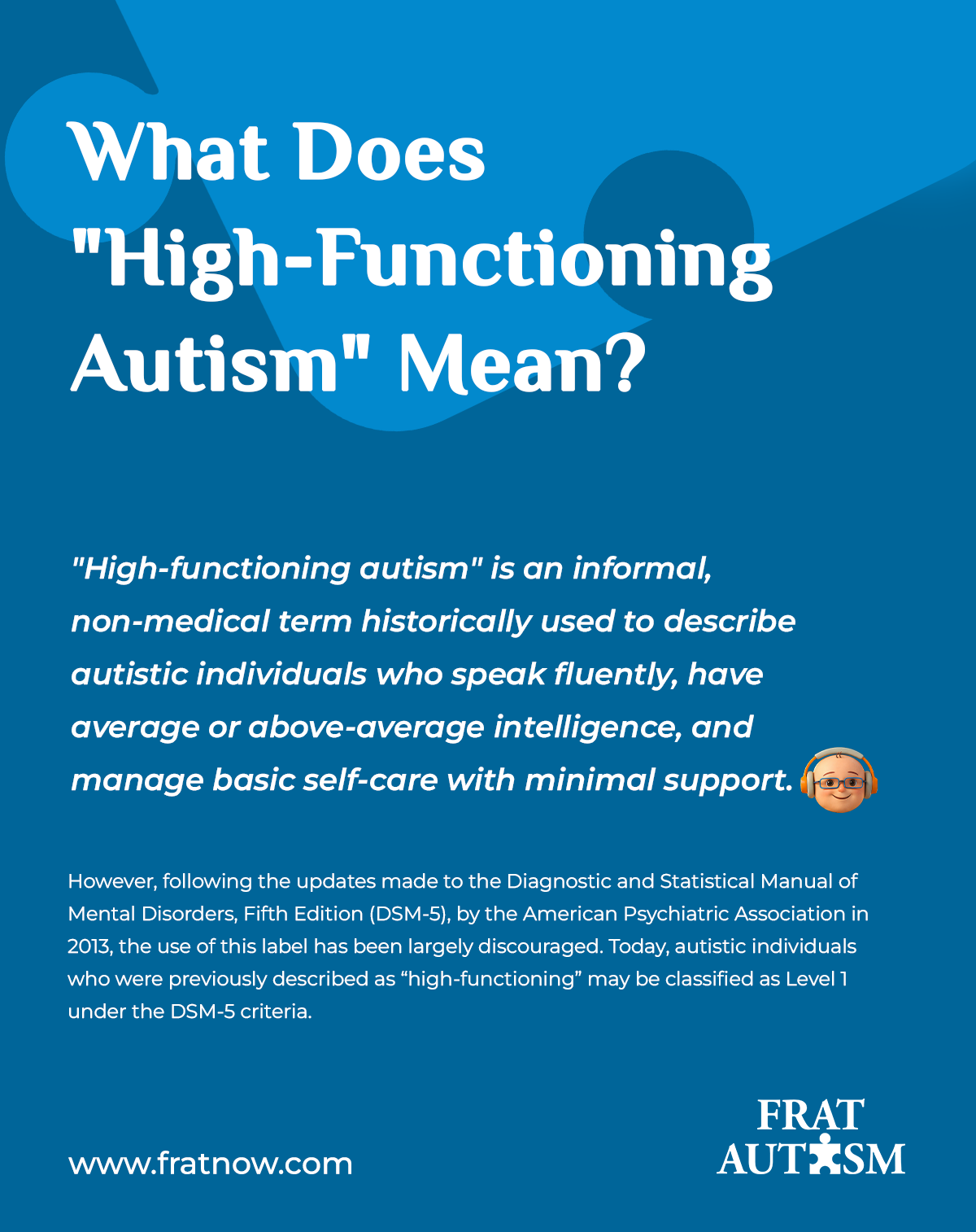
“High-functioning autism” is an informal, non-medical term historically used to describe autistic individuals who speak fluently, have average or above-average intelligence, and manage basic self-care with minimal support.
However, doctors, psychologists, and neurodiversity advocates have largely discouraged the use of this term because it can create a misleading picture. It describes how well an individual appears to pass as neurotypical to others rather than the internal struggles they experience or how much support they need.
How the “High-Functioning” Label Can Be Misleading
A major flaw of the “high-functioning” label is that it can prevent autistic children from getting the support they need. When teachers or relatives say, “But they seem fine to me. They’re so high-functioning,” it can invalidate the genuine exhaustion and sensory overload the child experiences daily.
- Example: A child may perform well academically and suppress their natural autistic traits at school all day. This is known as masking. But when they return home to a safe environment, they release their accumulated social stress through intense meltdowns or complete emotional shutdown.
Why “Support Levels” Replaced “High-Functioning”
In 2013, the American Psychiatric Association updated the Diagnostic and Statistical Manual of Mental Disorders, Fifth Edition (DSM-5), consolidating formerly separate categories, such as Asperger’s syndrome and pervasive developmental disorder, into a single diagnosis: autism spectrum disorder (ASD).
Instead of using vague functioning labels, clinicians now assign a severity level based on the amount of support an autistic individual requires in daily life:
- Level 1: Requiring Support (formerly referred to as “high-functioning”).
- Level 2: Requiring Substantial Support.
- Level 3: Requiring Very Substantial Support.
Although individuals previously described as “high-functioning” may be classified as Level 1 (requiring support), the two terms are not equivalent. An autistic individual may appear to manage well on the surface while still experiencing significant challenges and needing meaningful, structured support.
Why Identifying Folate Receptor Autoantibodies Is Important
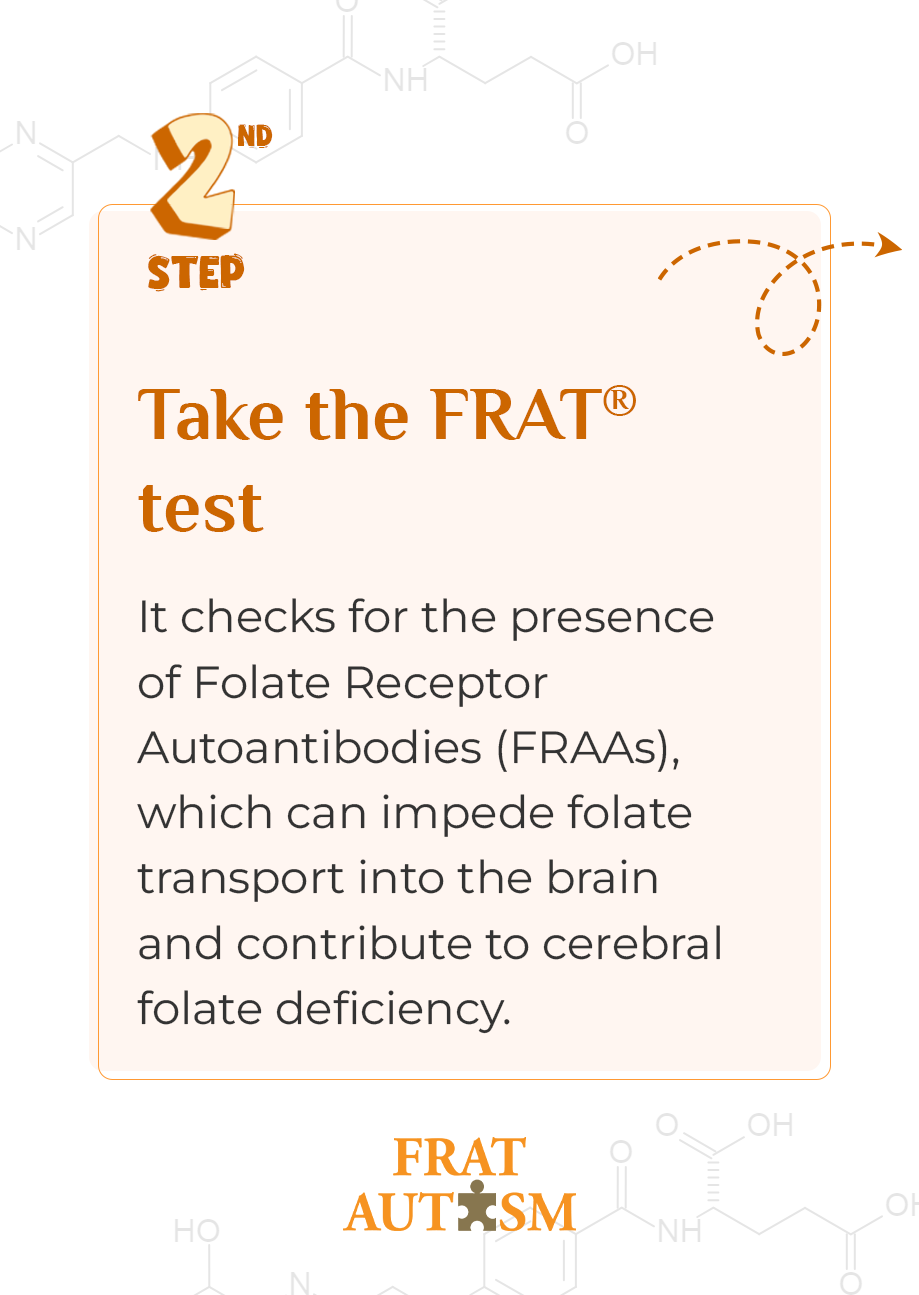
The brain needs folate (Vitamin B9) for healthy functioning. However, in a significant percentage of autistic children, the transport of this essential nutrient to the brain may be affected by folate receptor autoantibodies (FRAAs). This may potentially affect speech and language in these children.
The FRAT® test helps detect the presence of FRAAs. Identifying these autoantibodies may help doctors determine appropriate targeted treatments that could improve verbal communication in such children.
References
- Cumberland Academy of Georgia – https://cumberlandacademy.org/high-functioning-autism-vs-level-1-autism/
- Autism Speaks – https://www.autismspeaks.org/levels-of-autism
- Child Mind Institute – https://childmind.org/article/what-is-high-functioning-autism/
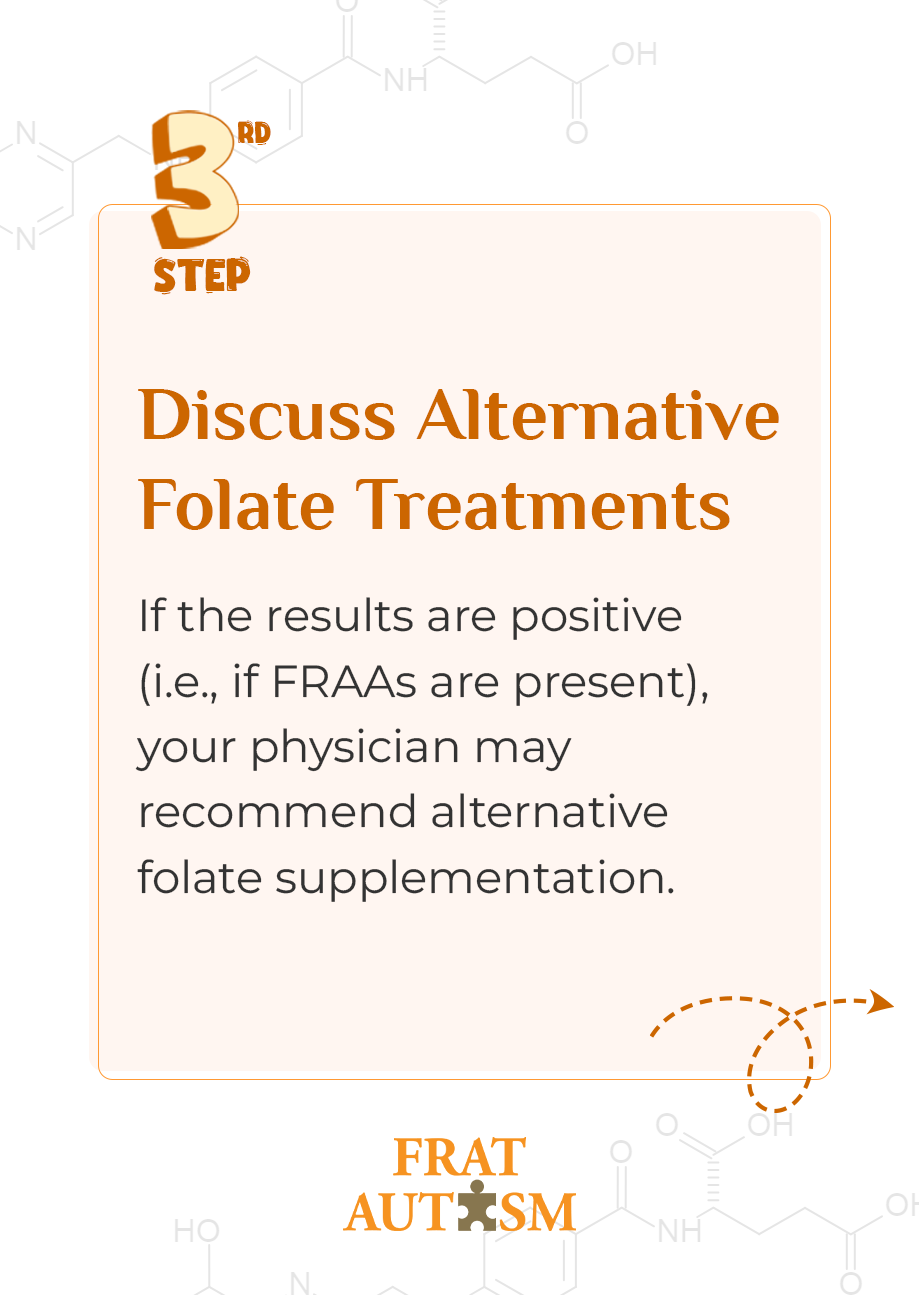
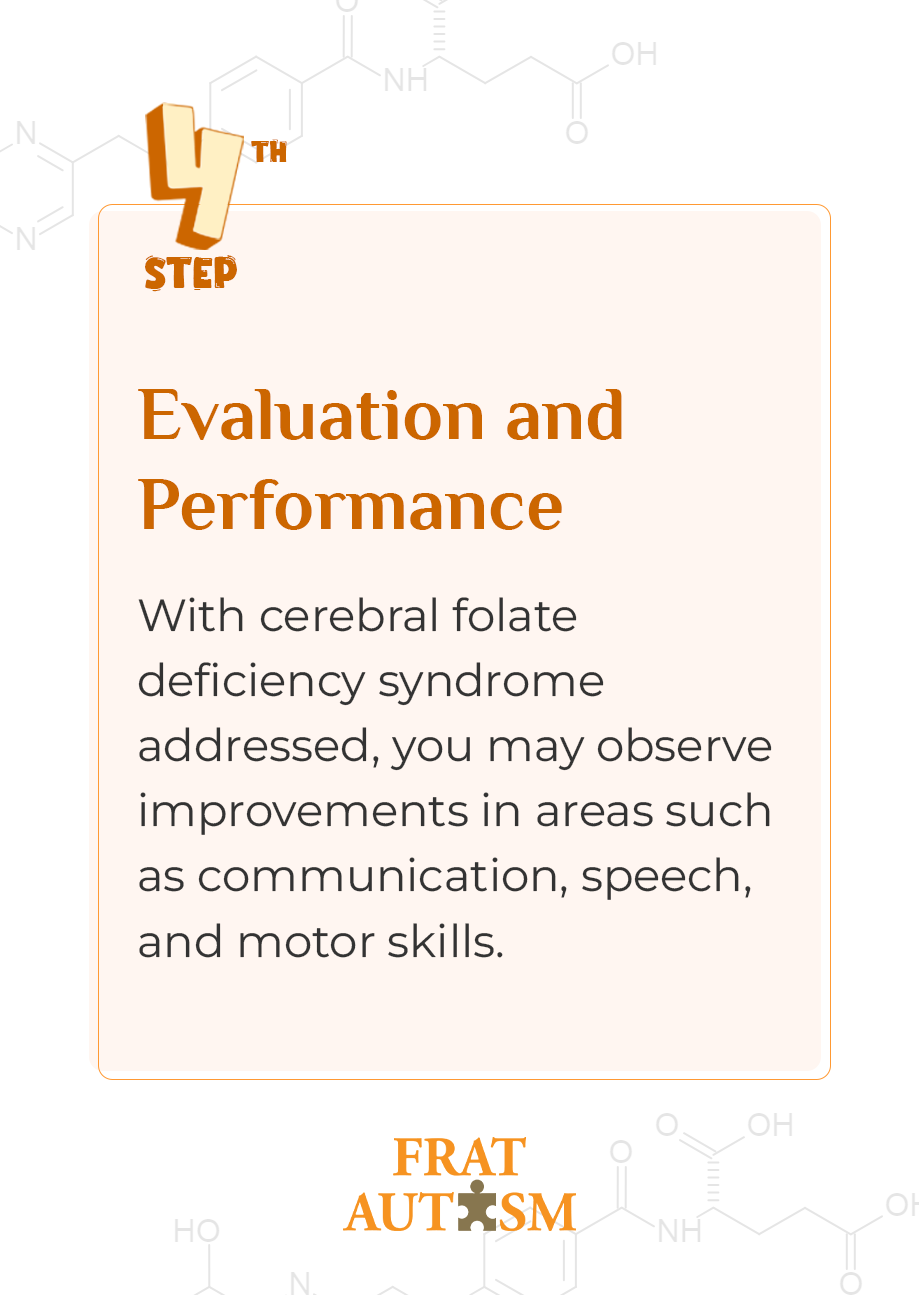
Curious to know if your child has these autoantibodies?
Here’s what you can do:

More Answer For You
- Can you be diagnosed with autism as an adult?
- How Is Autism Evaluation Performed?
- What Happens to Autistic Children When They Transition into Adulthood?
- What Are The Common Early Behavioral Signs Of Autism In Young Children?
- How Do People with Profound Autism Communicate?
- What Type of Doctor Diagnoses Autism?
- How to Support a Child with Autism in the Classroom?
- How To Explain Autism To Kids?
- Can People with Profound Autism Talk?
- What Is Profound Autism?
- Why Is Autism More Common In Males?
Is a Biological Roadblock Holding Back Your Child's Progress?
Don't just manage behaviors - address the underlying brain chemistry.
Identifying Folate Receptor Autoantibodies is the first step towards a more targeted autism care plan.
To request a FRAT® test kit, click the button below.