
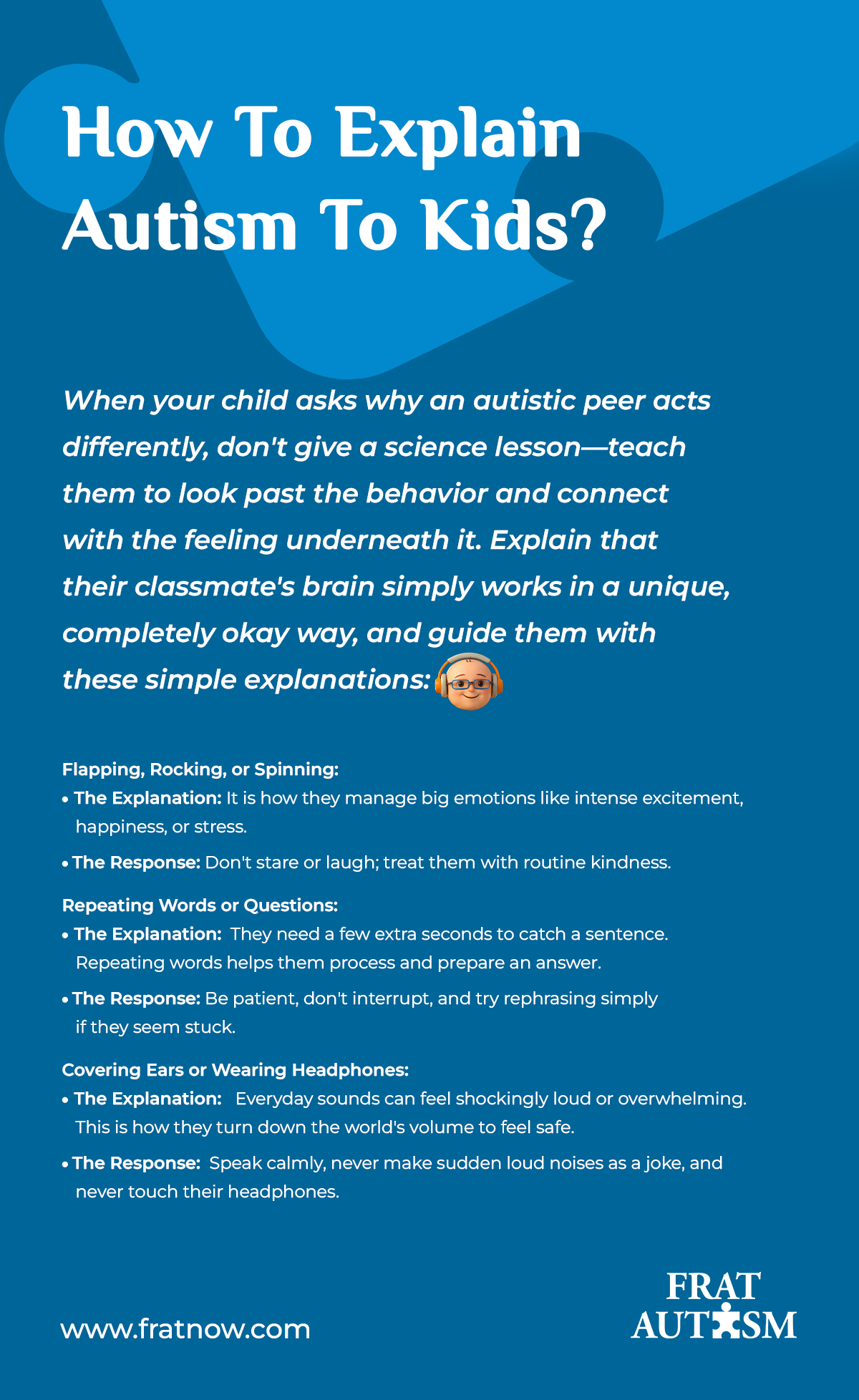
When your neurotypical child asks why an autistic peer acts differently, give a simple explanation free from clinical jargon. Let them know that autistic children experience the world uniquely, and that it is completely okay.
Instead of giving a science lesson, focus on helping your child emotionally process what they are seeing. Teach them to look past the unfamiliar behavior and connect with the feeling underneath it—whether that classmate is feeling overwhelmed, excited, or just needs a moment to think.
By teaching your child to decode these moments with empathy rather than curiosity, you help them see a peer who wants the exact same things they do: to be understood, included, and respected. Here are three common behaviors your child may notice, and how you can guide both their mind and their heart:
Behavior 1: Flapping hands, rocking, or spinning
- The Explanation: Tell your child these movements help autistic kids manage big feelings like stress, excitement, or intense happiness. It is their way of staying steady, comfortable, and focused when their emotions feel like a giant wave.
- The Response: Advise your child not to stare, laugh, or tell them to stop. Treat them with the same routine kindness and respect you would show anyone else.
Behavior 2: Repeating words or questions
- The Explanation: Explain that sometimes it just takes them a few extra seconds to catch and hold onto a spoken sentence. Repeating words out loud helps them emotionally connect with the conversation and prepare their response.
- The Response: Tell your child to be patient and give them time to reply without interrupting. If they seem stuck, try rephrasing the question more simply.
Behavior 3: Covering ears or wearing headphones
- The Explanation: Sounds that feel totally normal to us can feel completely overwhelming or shockingly loud to them. Covering their ears or wearing headphones is simply their way of turning the world’s volume down so they can feel safe and calm.
- The Response: Advise your child to speak calmly, avoid making sudden loud noises nearby as a joke, and never, ever touch or remove their headphones.
The most important thing your neurotypical child must remember about autistic kids is that they’re different, not wrong. They may communicate, play, or react differently, but still need friendship, understanding, and respect.
What is FRα Autoimmunity?
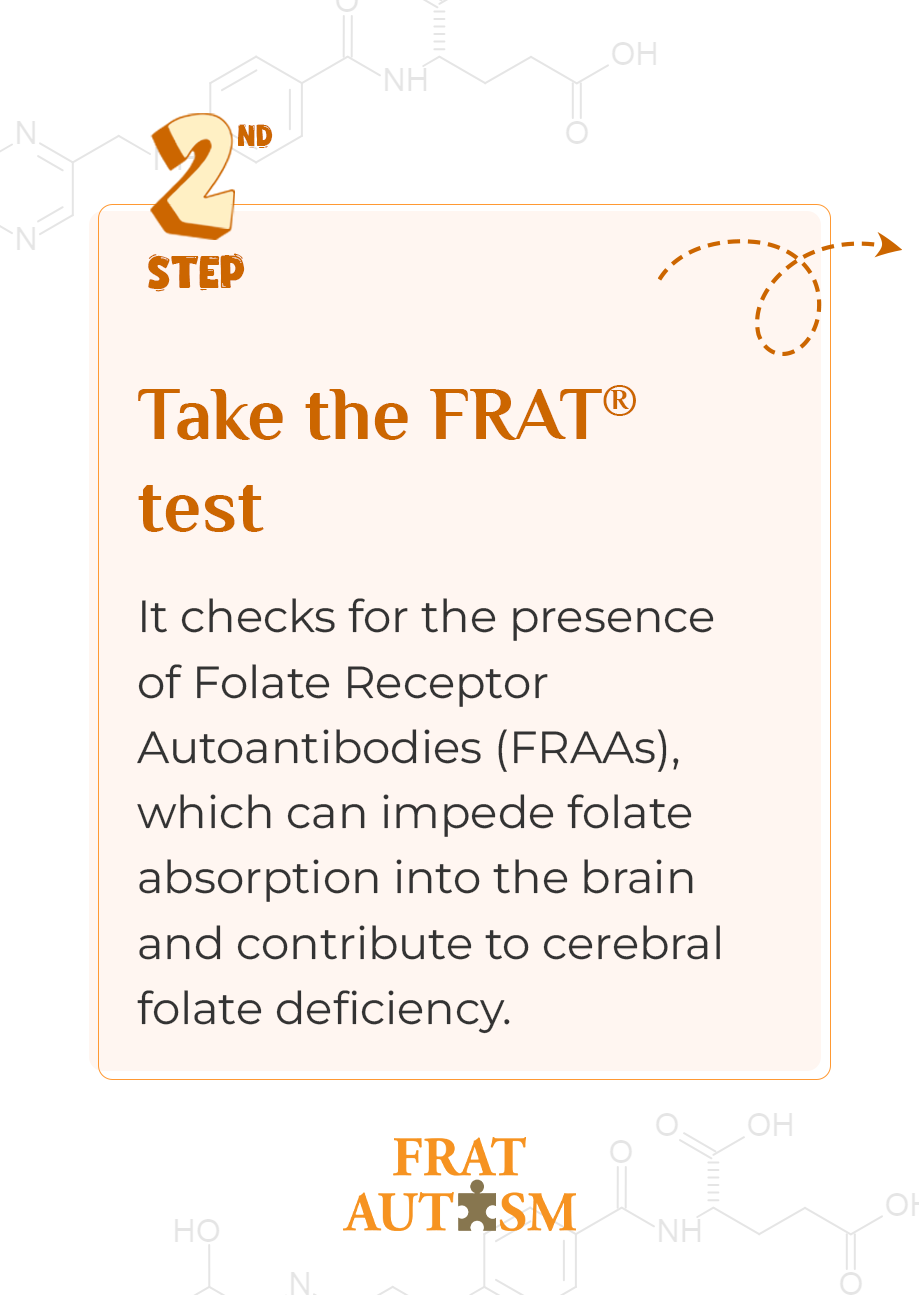
The Folate Receptor Alpha (FRα) is a protein critical for moving folate (vitamin B9) from the blood into the central nervous system. FRα autoimmunity occurs when the body produces folate receptor alpha autoantibodies (FRAAs) that target and bind to the FRα.
FRα autoimmunity causes cerebral folate deficiency syndrome (CFDS) in a significant percentage of autistic children. The FRAT® test detects the presence of Folate Receptor Alpha Autoantibodies (FRAAs) that cause FRα autoimmunity in such individuals. Early detection of FRAAs can lead to appropriate medical treatments and dietary adjustments, which may produce optimal outcomes in autistic children.
Curious to know if your child has these autoantibodies?
Here’s what you can do:
Is a Biological Roadblock Holding Back Your Child's Progress?
Don't just manage behaviors - address the underlying brain chemistry.
Identifying Folate Receptor Autoantibodies is the first step towards a more targeted autism care plan.
To request a FRAT® test kit, click the button below.