
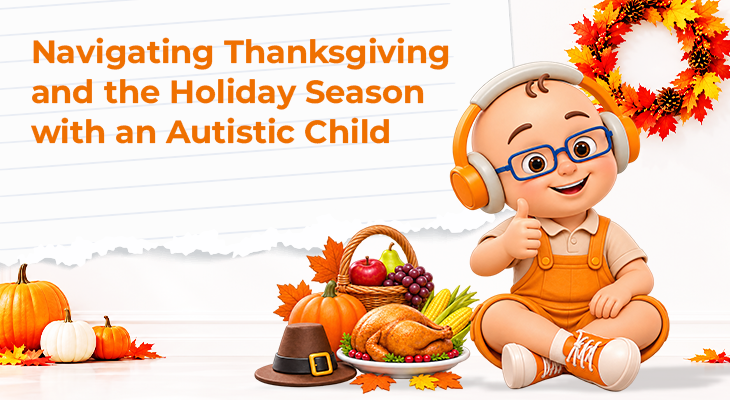
Thanksgiving is often painted as the ultimate picture of warmth: a golden turkey, roaring fires, laughing relatives, and a house buzzing with joy. But for parents of children with Autism Spectrum Disorder (ASD), that picture can feel a bit less festive, often times mixed with anxiety thinking about a potential logistical minefield.
Between the sensory overload of a crowded room, the disruption of routine, the unfamiliar foods, the pressure to “perform” socially, and the sheer duration of the day, Thanksgiving can be a recipe for meltdowns—for the child and the parents.
However, with intentional planning, robust advocacy, and a fundamental shift in expectations, Thanksgiving can be a meaningful and manageable holiday!
There are several tips available to help you navigate every facet of the festivities—from the weeks of preparation to the days of recovery, ensuring your child feels safe, understood, and genuinely included.
The Core Philosophy (Before You Plan Anything)
Before we get into logistics, schedules, and menus, we need to establish the foundational mindset that will govern every decision you make. Without this shift, even the best-laid plans will feel like failures. It may make sense to redefine “Success” and “Tradition”.
Traditions are meant to serve us, not the other way around. If sitting at a table for three hours is impossible for your child, that tradition needs to change. Maybe your family eats in shifts, or perhaps the kids eat at a separate “safe” table. Maybe you serve dinner at noon instead of 4 p.m. to accommodate your child’s nap or medication schedule. Give yourself permission to break the rules of Thanksgiving to protect your child’s peace. Success is not defined by how “normal” the day looks, but by how comfortable and regulated your child feels. This will make others comfortable as well!
Understand the many aspects of ASD and Socializing
Social masking—the act of suppressing autistic traits to appear neurotypical—is exhausting. Expecting your child to “hold it together” for a six-hour dinner party is like asking them to run a marathon without proper training. Every social interaction, every forced smile, every “hello” to a relative they haven’t seen in a year costs energy. Plan for breaks, and don’t force social interaction. Recognize that your child’s “behavior” at the end of the day is often not defiance—it is exhaustion.
Anticipate the "Autism Hangover"
The holiday isn’t over when the guests leave. The “autism hangover” – a period of dysregulation, fatigue, and emotional fragility – is real and predictable. Expect that your child may be dysregulated for 24-48 hours after Thanksgiving. They may have more meltdowns, sleep poorly, or be more rigid. This is due to the massive expenditure of energy required to navigate the day. Plan for it and give them (and yourself) some grace.
Embrace the Reality
It is certainly okay to feel sadness that the holiday doesn’t look like the ones on TV. It is okay to miss the ease of the past or the vision you had for your family. Honor that feeling and then pivot to gratitude for the peace you have created for your child. The goal is not a perfect Thanksgiving (that probably doesn’t even exist for anyone, anyway) ; the goal is a connected, safe, and authentic one.
Pre-Game Preparation (The Weeks Before)
Preparation is your best defense against anxiety. Children with ASD thrive on predictability, and the more information they have in advance, the safer they will feel.
Visual Schedules and Social Stories
- The Visual Schedule: Create a step-by-step visual timeline of the day. Include when you will wake up, when guests arrive, when dinner is served, when dessert happens, and—crucially—when it ends. Use pictures or simple text depending on your child’s reading level. Knowing there is a finish line reduces anxiety dramatically.
- Social Stories: Write a short, personalized story about the day. “On Thanksgiving, Grandma will visit. She will hug me. I can say ‘hello’ and then go play with my blocks. There will be loud noises, but I have my headphones. When it gets too loud, I can go to my room.” Read this daily leading up to the event. Include photos of relatives if possible.
- The Countdown Calendar: A visual countdown calendar may help your child’s understand of the passage of time and prepares them for the upcoming change.
The "Menu" Conversation
Don’t assume your child will eat the turkey. If they are a “beige food” eater (chicken nuggets, crackers, plain pasta), make a pact with yourself: You will not force a single bite of Thanksgiving food.
- Pack the Safe Food: Bring their favorite meal or ensure their safe foods are available at the table. If you are visiting relatives, pack a cooler with their preferred foods. This is not rude; it is responsible.
- The “No Thank You” Bite: If you are working on food expansion, allow them to lick or smell the food without pressure. But on a high-stress holiday, survival is the priority. There will be other days for food exploration.
- The “Same Plate” Rule: If your child is distressed by foods touching, use a divided plate so each food has its own compartment. This is a popular technique.
- Consider a Pre-Meal Snack: Feed your child a familiar snack before the big meal so they aren’t hungry and overwhelmed at the table.
Preview the Guest List
If relatives are visiting, show your child photos of them. Remind them of names and relationships. “Aunt Sarah will be there. She has red hair and a loud laugh. She loves to give hugs, but you can ask for a high-five instead.” If possible, arrange a brief, low-pressure video call or visit before the big day to re-establish familiarity.
Rehearse and Role-Play
Practice the scenarios that might occur. Role-play saying “hello,” asking for a break, or declining a hug. Practice sitting at the table for a short period and then using a “break card” to leave. The more your child practices these scripts, the more automatic and comfortable they become.
Consider a "What If" Plan
Sit down with your partner or a trusted adult and plan for the worst-case scenarios. What if your child has a meltdown at the table? What if they refuse to eat? What if a relative makes an unhelpful comment? Having a pre-agreed plan (e.g., “If X happens, I will take the child to the car for 10 minutes while you distract the guests”) reduces panic in the moment.
Managing the Sensory Environment
Thanksgiving is a sensory assault: the smells of roasting meat and candles, the clatter of silverware and dishes, loud laughter, overlapping conversations, and hugs from people who smell like perfume. For a child with sensory processing differences, this can be physically painful.
1. Create a "Sensory Safe Zone"
Designate one room or corner of the house as the “Safe Zone.” This should not be recognized as a punishment space; it is a retreat. It should be a space the child can access freely and without judgment.
- Stock it with: Noise-canceling headphones, a weighted blanket, a favorite stuffed animal, books, a tablet with preferred shows, fidget toys, and a soft place to sit.
- The Rule: The child can go there at any time, for any reason, without needing to explain themselves to guests. Practice this before the event so it feels familiar.
- At Someone Else’s House: If you are visiting relatives, ask in advance if there is a quiet room your child can use. Most people are especially accommodating, but, If not, consider bringing a small pop-up tent or creating a “comfortable corner” with pillows and blankets.
2. Address the Clothing Issue
Formal Thanksgiving clothes can be itchy, restrictive, and uncomfortable. If your child has sensory sensitivities to tags, buttons, stiff fabrics, or waistbands, let them wear their favorite soft clothes. A happy child in sweatpants is better than a miserable child in a bowtie. If a relative insists on a “nice outfit,” consider a compromise: a soft, comfortable shirt with the same “nice” appearance, or allowing the nice outfit only for photos and then changing.
3. Prepare for the Sounds
The sounds of Thanksgiving—the doorbell, the blender, the laughter, the football game on TV—can be overwhelming. Prepare your child by warning them about specific sounds: “The doorbell will ring when guests arrive. It will be loud, but it is just the doorbell.” Have headphones ready. Consider turning off the TV if possible (without offending others) or lowering the volume if it adds to the noise.
4. Prepare for the Smells
Smells can be intensely triggering. If your child is sensitive to cooking smells, keep windows open, use a fan, or allow them to stay in a different room while the cooking happens. If a relative’s perfume is overwhelming, have a plan to create distance.
Navigating the Meal Itself
The dinner table is often the most overwhelming part of the day. It combines sensory input, social demands, and food anxiety all in one place.
1. Seating Arrangements
- The Exit Seat: Seat your child at the end of the table or near the door. This allows them to leave the room easily if they become overwhelmed without having to climb over people.
- The Support Person: Seat them next to their primary caregiver or a trusted adult who understands their needs and can advocate for them.
- The Familiar Neighbor: If possible, seat them next to a sibling or cousin they are comfortable with.
2. The "Time Limit"
Don’t expect your child to sit through the entire meal. Use a visual timer (like a sand timer). Say, “You need to sit for 10 minutes, then you can be excused.” This sets a clear expectation and gives them an end point. If they leave early, praise them for the time they did sit.
3. The "No Thank You" Bowl
A useful strategy for the table: have a small bowl for your child to put any unwanted food into. This allows them to decline food without having to argue or explain.
4. Managing the Mess
Some children are distressed by messiness at the table—spills, crumbs, or food touching. Have napkins ready, consider a placemat, and be prepared to help clean up quickly.
Navigating the Guests (Advocacy and Education)
You are your child’s best interpreter. You need to advocate for them, even if it feels awkward.
1. The Pre-emptive Email/Text
Before guests arrive, send a friendly message: “We are so excited to see you! Just a heads up, [Child’s Name] may have their headphones on or need to step away to their room for quiet time. It’s not personal—it’s just how they recharge. We appreciate your understanding!” This sets expectations and prevents misunderstandings.
2. The "Don't Force the Hug" Rule
Relatives often want hugs. If your child doesn’t want to hug, offer a high-five, a fist bump, or a wave. If a relative insists, step in gently: “He is showing you love by waving today. We respect his body boundaries.” This protects your child’s autonomy and teaches relatives about consent.
3. The "Stimming is Okay" Policy
If your child flaps their hands, spins, paces, or repeats phrases, let them. Stimming is regulating. Do not ask them to stop. If a relative looks confused, simply say, “That’s how he settles his body. It helps him feel calm.” You are providing an education for others and that is perfectly fine!
4. Handling Unhelpful Comments
Relatives may make unhelpful comments: “He’s just being picky,” “He needs more discipline,” or “When I was a kid, we ate what was on our plate.” Prepare a few calm responses in advance:
- “We are following the advice of his therapists and doctors.”
- “We are prioritizing his comfort today. We can talk about this another time.”
- “He/She is doing their best, and so are we. We appreciate your support.”You do not owe anyone an explanation. It is okay to change the subject or walk away.
5. The "Exit Plan"
If the gathering becomes too much, have a pre-agreed exit plan. You can say, “We need to leave now for [Child’s Name]’s sake. We had a lovely time!” If you are hosting, you can retreat with your child to a private room and let your partner or a trusted relative handle the guests.
Planning for the Days After
The holiday isn’t over when the guests leave. The “autism hangover” is real.
1. Reentry Period
Expect that your child may be dysregulated for 24-48 hours after Thanksgiving. They may have more meltdowns, sleep poorly, or be more rigid. Give them grace and avoid scheduling anything demanding for the day after.
2. Decompression
Plan a “quiet” day after the event. No demands, no outings. Just relaxation and quiet time to reset their nervous systems. This is not laziness; it is recovery.
3. Debrief and Celebrate
After the holiday, take a moment to reflect on what worked and what didn’t. Celebrate the small wins—a smile over a slice of pie, a calm ten minutes at the table, or a successful high-five with a grandparent. Use this information to plan for next year.
Alternative Thanksgiving Celebrations
If a traditional Thanksgiving dinner is simply not feasible for your family, it is okay to create an alternative celebration.
1. The "Small Gathering" Option
Consider hosting or attending a smaller gathering with only the people your child is most comfortable with. A quiet dinner with immediate family can be just as meaningful as a large extended-family gathering.
2. The "Restaurant" Option
If hosting is too stressful, consider going to a restaurant. Restaurants can be challenging for sensory reasons, but you can research quiet restaurants, request a corner table, and bring headphones. Alternatively, order takeout and eat at home.
3. The "Buffet" Option
If sitting at a table for a long meal is difficult, consider a buffet-style meal where people serve themselves and eat in different rooms or at different times. This reduces the pressure of a formal sit-down dinner.
4. The "Thanksgiving Walk" Option
Some families find that a Thanksgiving walk or hike is more meaningful and less stressful than a traditional dinner. You can incorporate gratitude by having each person share something they are thankful for during the walk.
5. The "Friendsgiving" Option
If extended family gatherings are too stressful, consider a “Friendsgiving” with other families who understand and support your child’s needs.
Gratitude and Reflection
Thanksgiving is about gratitude. Be grateful that you are the kind of parent who is reading this article, trying to make the world softer for your child. Be grateful for all the small wins!
Take a moment to reflect on what you are grateful for, not just as a parent, but as a person. By prioritizing connection over compliance and comfort over tradition, you can create a Thanksgiving that feels truly special—not because it was perfect, but because your child felt loved and safe.
You are not just surviving Thanksgiving. You are teaching your child that they are worthy of love and accommodation. You are teaching your relatives about acceptance. You are teaching yourself about resilience. That is something to be truly thankful for!
HAPPY THANKSGIVING!