
Download Download & share this Knowledge card in your network [Free Download]
Introduction
Digital gaming is a major part of modern childhood and adolescence, and many autistic individuals develop a strong interest in games—sometimes even more intensely than their neurotypical peers. For some families, gaming becomes a source of joy, connection, and learning. For others, it raises concerns about screen time, sensory overload, or difficulty transitioning away from games.
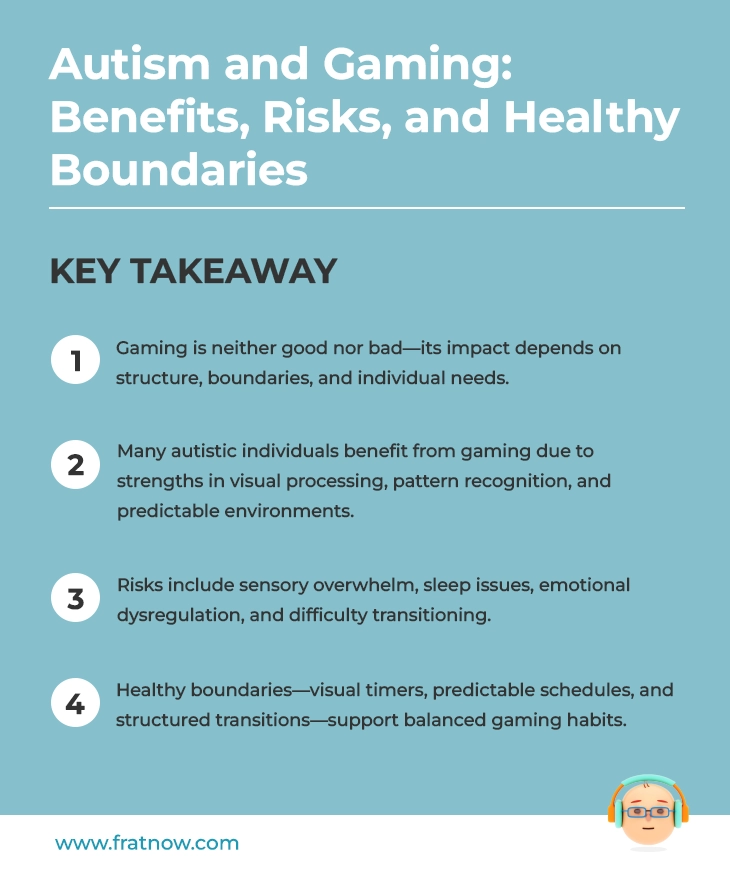
Research shows that gaming is neither inherently harmful nor universally beneficial. Like any tool, its impact depends on the individual’s cognitive profile, neurodevelopmental needs, and the structure of play. When used thoughtfully, gaming can support learning, emotional regulation, and even social communication. When unstructured, it may contribute to sleep disturbances, time blindness, irritability, or reduced physical activity.
This blog examines the scientific evidence behind gaming and autism—its benefits, risks, and how to create healthy boundaries for children, teens, and adults.
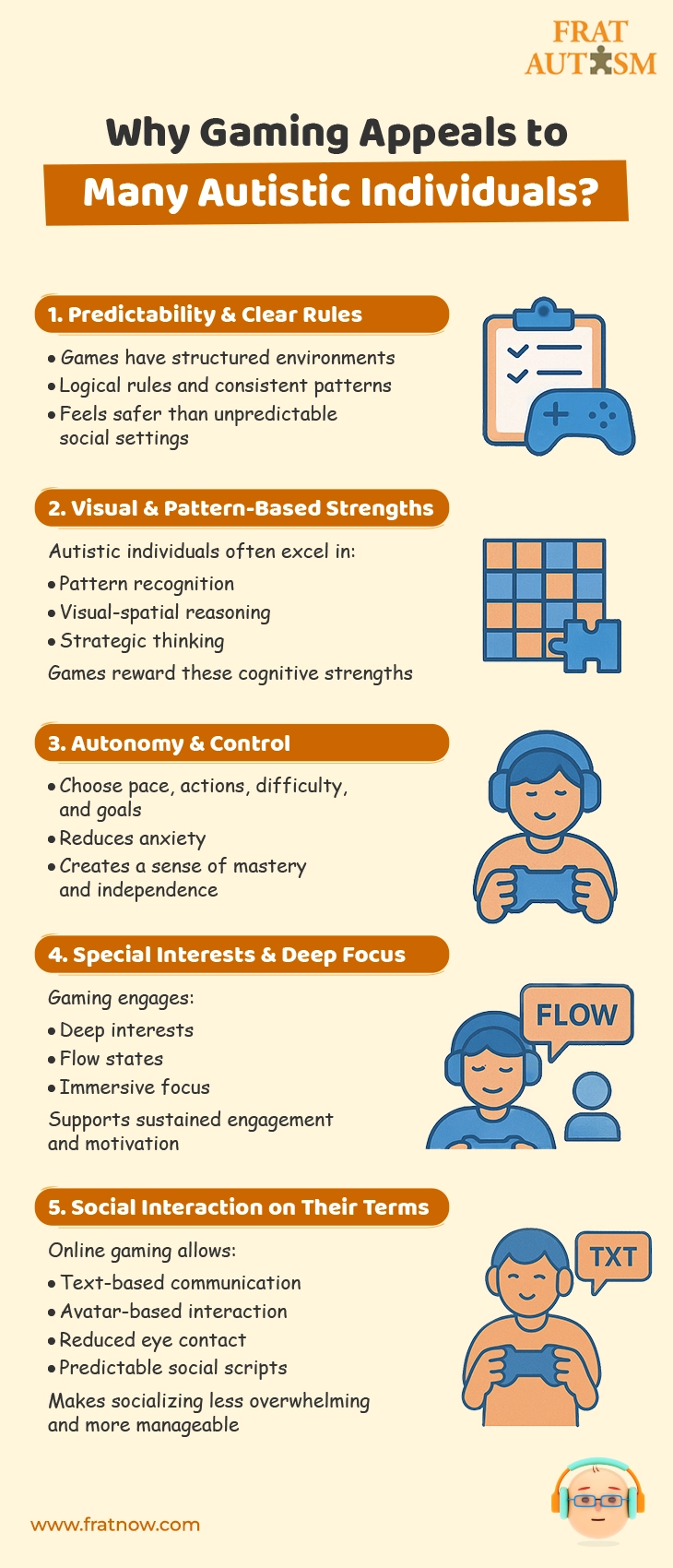
Why Gaming Appeals to Many Autistic Individuals?
Autistic individuals often gravitate toward gaming for reasons closely tied to neurocognitive functioning and sensory processing. Games can offer environments that feel more manageable, rewarding, and emotionally safe compared to many real-world social situations.
1. Predictability and Clear Rules
Video games are built around structured systems with defined rules, consistent logic, and predictable outcomes. For many autistic individuals, this predictability provides a sense of safety and clarity that may be harder to achieve in real-life social environments, which are often nuanced, ambiguous, and unpredictable. Clear rules reduce cognitive load and help players understand expectations without guesswork.
2. Visual and Pattern-Based Processing Strengths
Many autistic individuals demonstrate strengths in pattern recognition, visual-spatial reasoning, systemizing, and strategic thinking. Games frequently reward these abilities by requiring players to identify patterns, anticipate outcomes, and apply logic to progress. As a result, gaming environments can feel naturally aligned with how autistic individuals process and interpret information.
3. Autonomy and Control
Gaming allows players to control their actions, pace, difficulty level, and goals. This sense of autonomy can significantly reduce anxiety, particularly for individuals who may feel overwhelmed by external demands or social pressures. The ability to pause, retry, or adjust gameplay fosters a sense of mastery and competence that can be emotionally regulating.
4. Special Interests and Deep Focus
Gaming often activates the same neural mechanisms associated with deep interests, flow states, and immersive focus—traits that are commonly observed in autism. Many autistic individuals experience strong engagement when an activity aligns with their interests, and games are particularly effective at sustaining attention through structured challenges and clear feedback systems.
5. Social Interaction on Their Terms
Online and multiplayer games can offer social interaction in formats that feel more accessible and less overwhelming. Typed communication, avatar-based interaction, reduced reliance on eye contact, and predictable social scripts allow autistic individuals to engage socially while maintaining a sense of control. This can make social participation feel safer and more manageable than face-to-face interactions.
Download Download & share this infograph card in your network [Free Download]
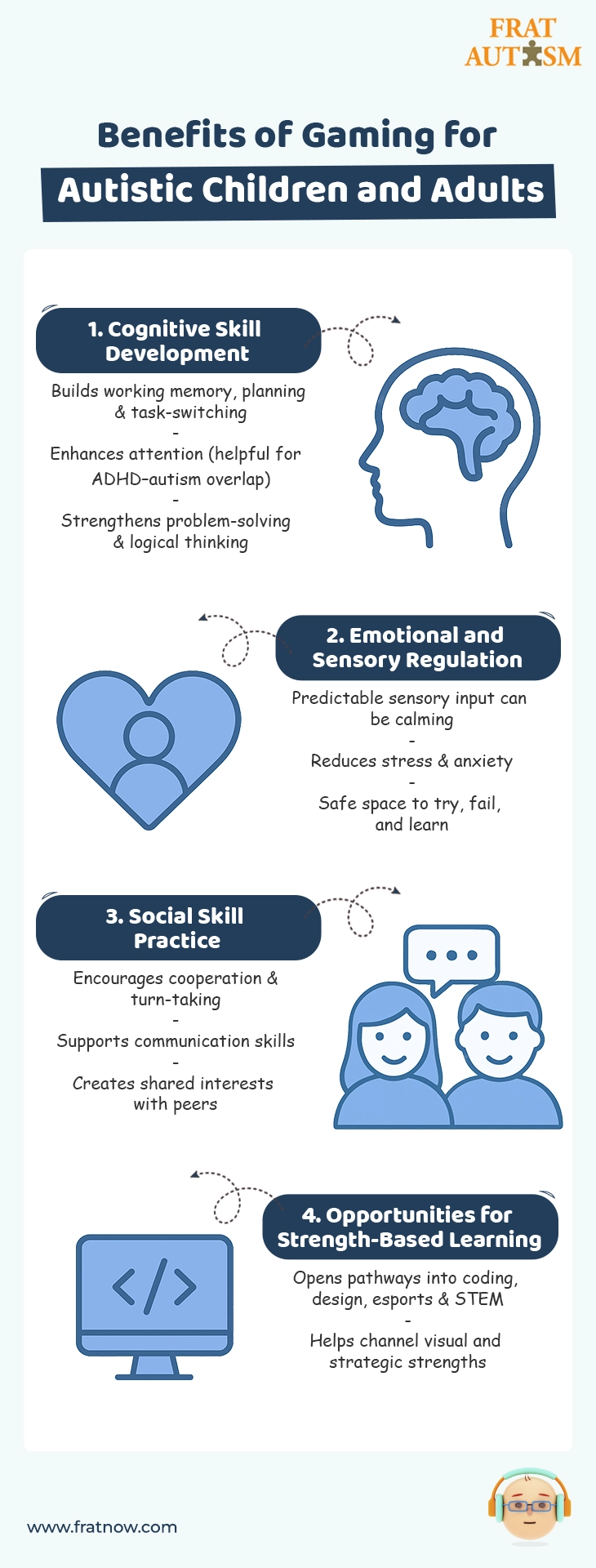
Benefits of Gaming for Autistic Children and Adults
When used in a structured and intentional way, gaming can offer meaningful cognitive, emotional, and social benefits for autistic children, adolescents, and adults. Rather than being purely recreational, certain types of games can support skill development and regulation when aligned with an individual’s strengths and needs.
1. Cognitive Skill Development
Many games provide opportunities to practice core executive functioning skills such as working memory, task switching, planning, and prioritization. Strategy-based and puzzle games, in particular, require players to anticipate outcomes, manage multiple objectives, and adjust approaches in real time. Games can also sustain attention for longer periods, which may be especially beneficial for individuals with co-occurring ADHD and autism. In addition, games that emphasize cause-and-effect reasoning or tactical decision-making can strengthen problem-solving abilities and analytical thinking.
2. Emotional and Sensory Regulation
Gaming environments can offer controlled sensory input that feels calming rather than overwhelming, especially when sound, visuals, and pacing are predictable. Immersive gameplay may help reduce stress and anxiety by providing a focused and engaging activity that supports emotional regulation. Games also create a safe space for experimentation, allowing players to make mistakes, learn, and try again without real-world consequences, which can build confidence and resilience.
3. Social Skill Practice
Research suggests that certain types of gaming can support social development by encouraging cooperation, turn-taking, and shared problem-solving. Multiplayer and cooperative games may help autistic individuals practice communication skills in a structured context, while also creating shared interests with peers. These shared experiences can serve as a bridge for social connection and reduce barriers to interaction.
4. Opportunities for Strength-Based Learning
For many autistic individuals, gaming serves as a gateway to strength-based learning and career interests. Skills developed through gaming often translate into areas such as coding, animation, digital design, esports, and data analysis. By aligning with existing interests and cognitive strengths, gaming can foster engagement in STEM-related fields and support long-term learning pathways.
Download Download & share this infograph card in your network [Free Download]
Risks and Challenges to Consider
1. Excessive Screen Time
Extended gaming sessions can contribute to several health and behavioral concerns, particularly when screen time is unstructured. Reduced physical activity, disrupted sleep patterns, increased irritability, and impaired daytime alertness are commonly reported. For many autistic individuals, a tendency toward hyperfocus can make disengaging from gameplay especially difficult, increasing the risk of prolonged screen exposure and its associated effects.
2. Emotional Dysregulation After Gaming
Transitioning abruptly from highly stimulating gaming environments to everyday tasks can trigger emotional dysregulation. This may present as meltdowns, shutdowns, irritability, or difficulty shifting attention. Games that involve fast pacing, competitive elements, or frequent rewards may intensify these responses, making transitions more challenging without appropriate supports
3. Sensory Overload
Many video games include bright visuals, rapid movement, and loud or unpredictable audio, which can overwhelm sensory processing systems. For autistic individuals who are more sensitive to sensory input, this overload may lead to headaches, fatigue, increased stress, or disruptions in sleep cycles. Over time, repeated sensory strain can negatively affect overall regulation and well-being.
4. Social Risks in Online Gaming
Online gaming environments can introduce social risks that require careful monitoring. These include exposure to cyberbullying, inappropriate content, unmoderated communication with strangers, and social pressure from gaming communities. Without clear boundaries and supervision, these interactions may contribute to stress, anxiety, or unsafe experiences for autistic players.
5. Impact on Executive Function
Excessive or poorly regulated gaming can interfere with executive functioning skills such as task initiation, time awareness, routine-building, and responsibility management. Activities like homework completion or household tasks may become more difficult to initiate or sustain. In some cases, underlying neurodevelopmental factors—such as attention regulation challenges or reduced cognitive flexibility—can further complicate disengagement from gameplay.
Healthy Boundaries: Practical, Science-Aligned Strategies
The goal of setting boundaries around gaming is not to eliminate it, but to help autistic individuals develop balanced, predictable gaming habits that support overall wellbeing, emotional regulation, and daily functioning. When boundaries are thoughtfully designed and individualized, gaming can remain a positive and supportive activity rather than a source of conflict or dysregulation.
1. Establish Predictable Gaming Routines
Predictable gaming schedules help reduce anxiety and prevent power struggles by setting clear expectations in advance. Structured routines—such as allowing gaming from a specific time window each day or after certain responsibilities like homework are completed—enable autistic individuals to mentally prepare for both gaming time and transitions away from it. Consistency supports emotional regulation and improves cooperation.
2. Pre-Transition Important Considerations
Transitions away from gaming are often challenging, particularly when they occur abruptly. Using structured warnings before gameplay ends—such as alerts at 10, 5, and 2 minutes remaining—can significantly ease this process. Pairing these warnings with visual timers, gentle vibrations, or on-screen reminders supports cognitive shifting and reduces the stress associated with sudden transitions.
3. Choose Games that Support Strengths
Not all games have the same cognitive or sensory impact. Selecting games that align with the individual’s strengths and needs can enhance positive outcomes. Games that promote problem-solving, motor coordination, creativity, or cooperative social interaction—such as puzzle games, sandbox environments like Minecraft, or collaborative adventure games—can reinforce skill development while minimizing unnecessary sensory or emotional strain.
4. Monitor Online Interactions
Online gaming environments require careful oversight to ensure emotional and physical safety. Caregivers should regularly review privacy settings, monitor voice or text communication when appropriate, and ensure content filters are active. Modeling respectful, safe communication and setting clear expectations around online behavior can further protect autistic individuals from negative social experiences.
5. Collaborate with the Autistic Individual
Involving the autistic individual in decisions about gaming schedules, boundaries, reward systems, and game selection fosters autonomy and mutual respect. Collaborative planning increases buy-in, improves compliance, and reduces resistance, as individuals are more likely to engage positively when they feel heard and included in the process.
6. Observe Behavioral Patterns
Ongoing observation is essential to ensure gaming remains balanced. Signs such as disrupted sleep, irritability when gaming is restricted, withdrawal from other interests, or missed responsibilities may indicate that adjustments are needed. In some cases, these patterns may warrant additional clinical evaluation to address underlying regulatory or executive functioning challenges.
When to Seek Professional Support?
Professional guidance may be helpful when gaming:
- Causes significant distress
- Interferes with daily functioning
- Leads to sleep disturbance
- Becomes compulsive or hard to stop
- Triggers emotional or sensory dysregulation
Clinicians may explore underlying factors such as:
- Attention regulation
- Anxiety
- Executive function challenges
- Or, when indicated, potential biological contributors like folate transport issues
Conclusion
Gaming plays a meaningful role in the lives of many autistic children, adolescents, and adults. When approached with balance and structure, it can support cognitive growth, emotional regulation, and even social connection. At the same time, the risks—sensory overload, sleep disruption, and difficulties with transitions—highlight the need for thoughtful boundaries and individualized routines.
Because every autistic individual processes sensory, cognitive, and emotional information differently, there is no universal gaming strategy. Instead, caregivers and clinicians can use visual tools, predictable schedules, and collaborative planning to build healthier gaming habits that respect the person’s strengths, challenges, and interests.
Ultimately, gaming becomes most beneficial when it aligns with the individual’s sensory needs, supports skill development, and fits into a balanced lifestyle. By blending scientific understanding with practical strategies, families and clinicians can create gaming routines that are both healthy and empowering for autistic individuals.
FRAT® Test - Key Facts To Know
Of the 20,000+ individuals tested with the FRAT® test, a significant percentage showed positive results, indicating the presence of Folate Receptor Autoantibodies. Supplementation with alternative treatments like folinic acid has demonstrated improvements in quality of life for many of these individuals.
A FRAT® user’s TikTok video, sharing her child’s positive transformation following a positive FRAT® test result, went viral. Since its posting, the video has garnered an impressive 800K views, 79K likes, 27K shares, 33K bookmarks, and over 3K comments. Watch the video below:
@kyra2532 LIFE CHANGING updates for children with autism. #autismmom #childwithautism #autismresearch #autismfamily ♬ original sound - Kyra
Note: This video is only available in
regions where TikTok is available.
Over the years, more than 1400 physicians have been prescribing the FRAT® Test, underscoring its growing recognition as a valuable diagnostic tool.
Here’s what Maxwell (Parent to an autistic child) has to say about the FRAT® test:

MAXWELL M.
References
- NIH: Screen Time and Autism Spectrum Disorder: A Comprehensive Systematic Review of Risk, Usage, and Addiction
- Jama Network: Screen Time and Autism Spectrum Disorder
- NIH: Prevalence and Correlates of Screen-Based Media Use among Youths with Autism Spectrum Disorders
- NIH: What is all that screen time doing to your child’s brain?
- NIH: Digital Media and Autism Spectrum Disorders: Review of Evidence, Theoretical Concerns, and Opportunities for Intervention